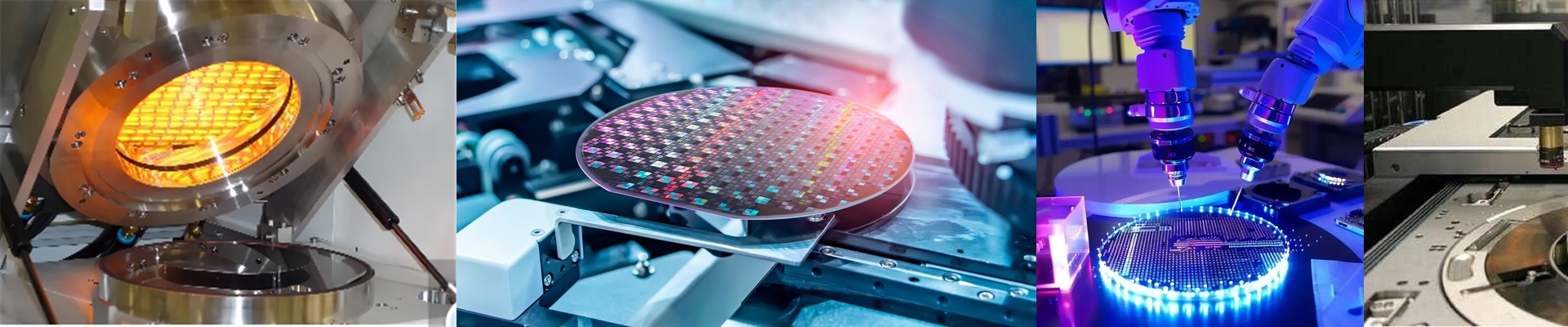
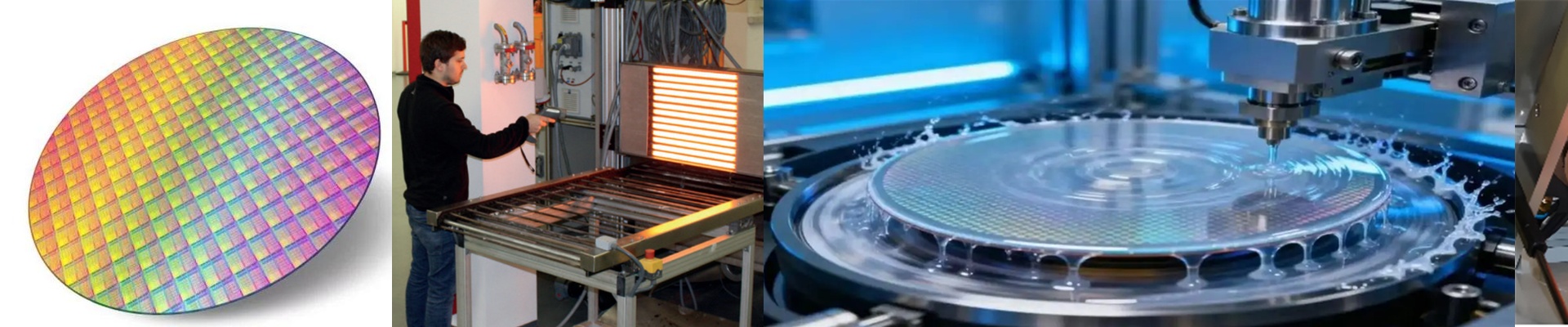
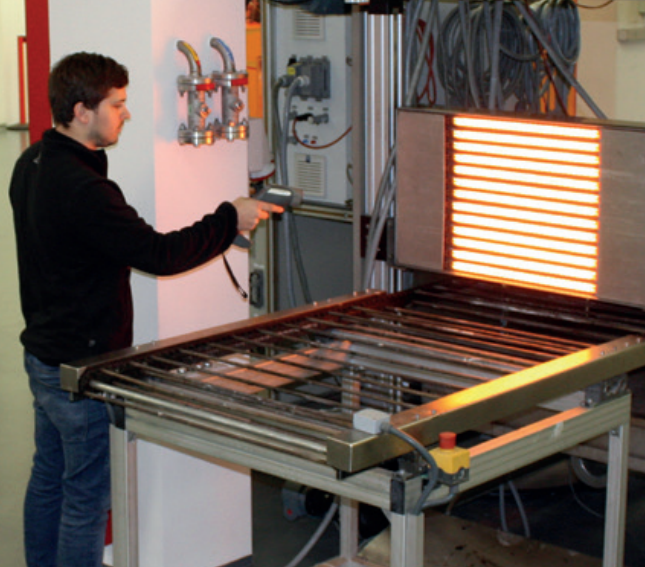
On the fab floor, thermal drift isn’t some academic exercise. It’s a yield leak you can feel. A half-degree excursion can nudge critical dimensions and leave solvent carryover above spec. We spec bulk infrared bulbs for the fab because they lock the thermal budget—so the process stops chasing heater behavior and just runs the recipe. What matters, technically, is control. We build these bulbs around fast-ramp halogen elements in quartz envelopes, tuned for short-wave and medium-wave output that matches how photoresist and underfill absorb energy. You get wafer-level uniformity within ±0.1°C, setpoint repeatability that holds across shifts, and zero particle generation so your cleanroom stays steady at Class 1–100 particle counts. The response is quick enough for high-throughput soft bake and hard bake, and the output stays stable through thousands of cycles. Why this works in practice? Put it where heat has to be precise and clean: wafer drying after cleaning, photoresist soft bake and hard bake in lithography, encapsulant and underfill curing in packaging, and final drying after wafer cleaning. Tighter critical dimension control follows, defect density drops, and you stop reworking lots because the temperature swings are cut off at the source. Efficiency improves, too—IR coupling cuts soak time, and bulb life supports long campaigns, routinely hitting 5,000+ hours with minimal output degradation. Installation is straightforward, but alignment and mounting repeatability matter. Match the reflector geometry to your hot zone, confirm voltage and connector compatibility with your equipment, and plan for proper thermal isolation so adjacent polymers stay protected. Calibrate on a schedule that fits your SPC rhythm; even a stable IR source needs traceable verification to keep bake profiles in spec across product splits.