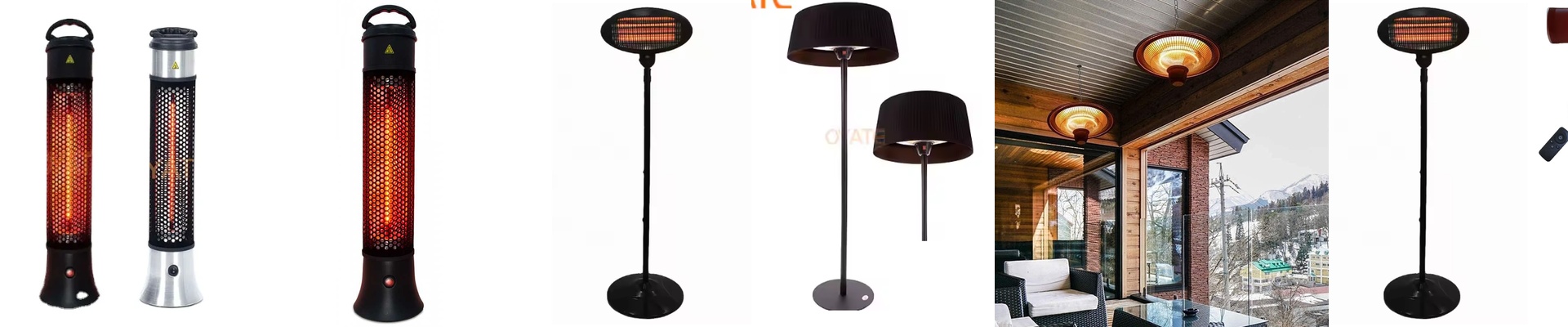
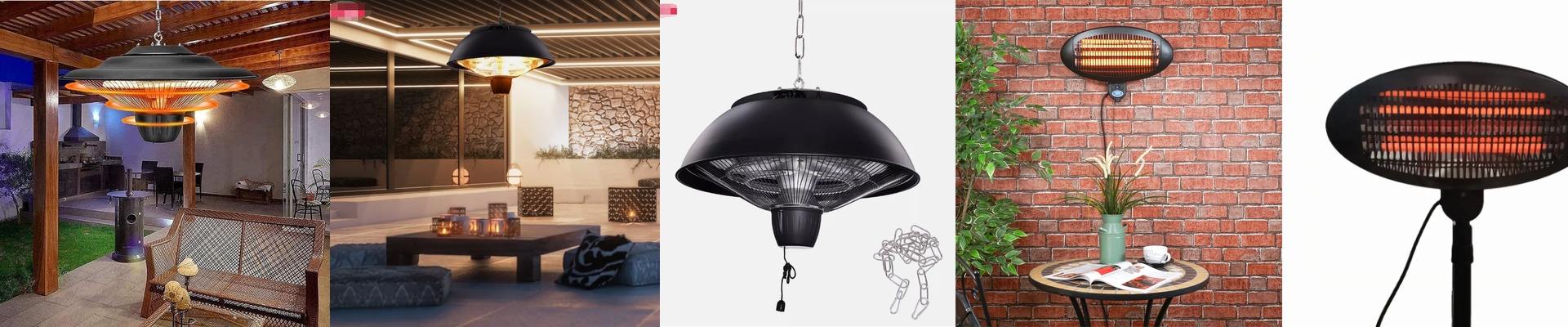
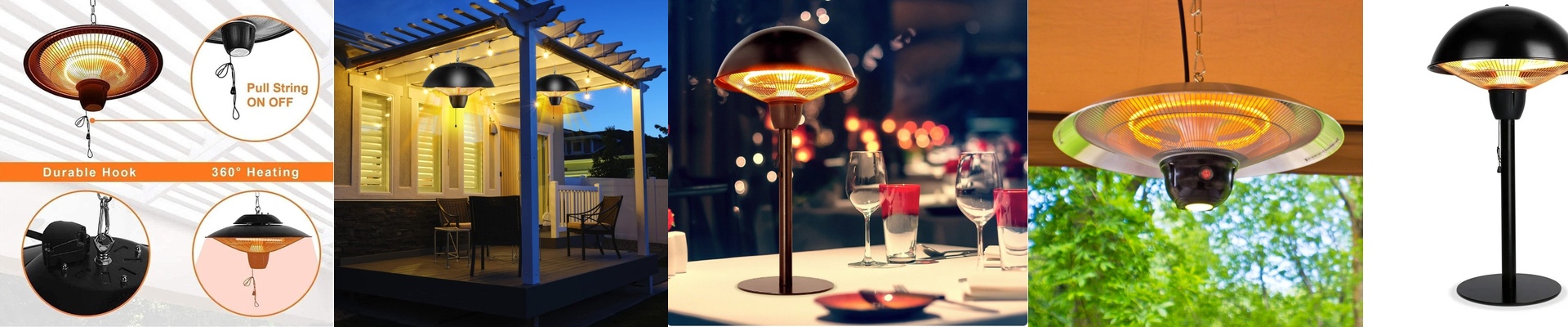
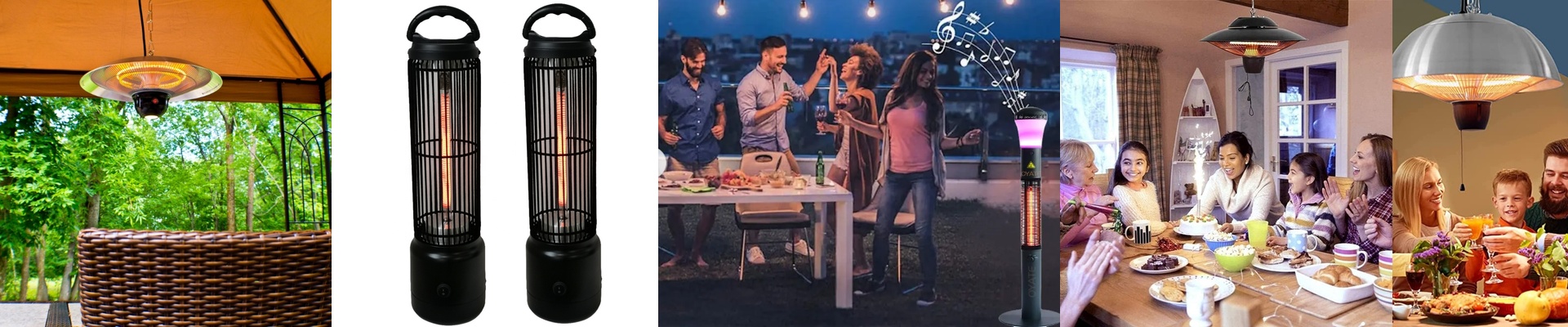

The sun drops behind the fence, and your garden flips from welcoming to sharp and uninviting. Conversations cut short. Hands disappear into pockets. The evening wraps up before anyone is ready. A patio heater changes that—not by trying to warm the whole yard, but by putting heat where people actually are.
What matters, technically
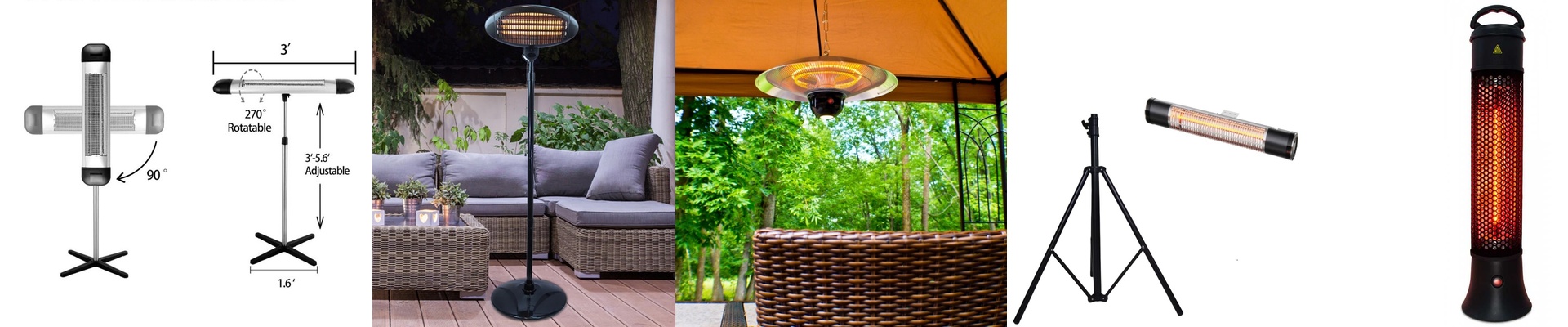
We built this garden heater around radiant infrared warmth. Air just doesn’t carry heat the way solid objects do. A high-efficiency quartz tube delivers immediate, directional heat, so you feel it within seconds of switching on. Rated at 1.5 kW, it’s designed for outdoor use on a standard 13 A socket, sits compactly on a patio table, or mounts cleanly to a wall. A built-in thermostat holds the output steady. Tip-over protection shuts the heater off if it gets knocked over. And for weather protection, the IP rating keeps the internals safe from splashes and light rain.
Why this approach works outside
In a garden, wind and open space make convective heaters feel weak—and expensive to run. Radiant heat behaves more like the sun: it warms you directly, not the air around you. That means you can keep dining, reading, or entertaining as the temperature falls, without waiting for a big area to heat up. Because the warmth is targeted, you’re only paying for energy where you need it, which keeps running costs predictable. The payoff is simple: more usable time outside, fewer interruptions, and evenings that stay comfortable.
The details that make the difference
For the best results, point the heater so the infrared beam hits the seating area directly, and keep it at least 1 meter from combustible materials. Remember, radiant warmth heats surfaces and people, so the surrounding air can still feel cool—layering up helps. If you want broader coverage, add a second unit instead of chasing more power. And as with any outdoor electric heater, use an outdoor-rated extension cord and a residual current device for added safety.