
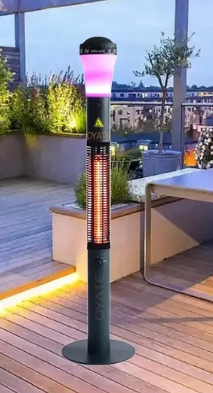
How to Actually Seal Lead-Wires for IPX4 Infrared Heaters
If you’re aiming for an IPX4 rating, you’re basically saying your heater can take a splash from any direction and keep on ticking. But in a real industrial setting, it’s rarely just about water. It’s about the grime, the conductive dust, and the humidity that loves to creep into the exact spot where your lead wires hit the heating element.
Why most heaters just… die
Here is the thing: most off-the-shelf heaters fail at the connection point. It’s a simple physics problem. The heater cycles on and off, which means the wires are constantly expanding and contracting. If you’re using cheap seals, they’re going to crack. It’s inevitable. Once that seal splits, moisture gets in. Mix that with high heat, and you get “thermal aging”—which is really just a fancy way of saying the insulation burns and turns into carbon. Once that happens? You’ve got a dead short. End of story.
The difference between “standard” and “done right”
A lot of shops just glob some silicone potting on there and call it a day. The problem is that standard silicone shrinks when it gets hot for too long. It leaves a tiny gap. And in this business, a tiny gap is a highway for failure. We do things a bit differently. We use a multi-stage process with high-temp ceramic adhesives and specialized heat-shrink sleeves. These aren’t the kind that pull away from the wire over time; they actually stay put. We build the seal right into the heater’s footprint. It makes the transition from the quartz tube to the wire airtight. Without this, you’ll start seeing “tracking”—those annoying little electrical arcs that slowly eat through your wiring until everything goes dark.
The trade-off you need to know about
Now, there is a catch. When you add this kind of heavy-duty sealing, the lead wires get stiffer. You can’t just bend them into a sharp 90-degree angle like you can with unsealed wires. If you force a tight bend during installation, you’ll probably crack the seal you spent so much time perfecting. My advice? Leave yourself some slack in the wiring harness. Give the wires room to breathe so there’s no mechanical stress. It’s a small detail, but it’s the difference between a heater that dies early because of a preventable leak and one that actually lasts until the element itself wears out.